Saturday, January 8, 2022

Warming Citrus Drinks for Wintertime


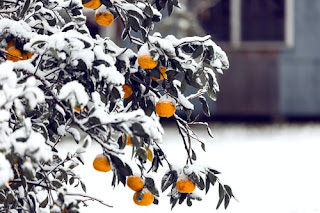
After a relatively warm Christmas, one look at the national weather report in the northern hemisphere in January is all it takes to convince anyone: baby, it's cold outside!  There's snow in the west, snow in the north, even snow in the deep south. To top it off, the sudden change from unseasonably warm in December to blizzards and wind chill factors in January is challenging even the most hardy of immune systems.  Here in Florida, there isn't any snow, but the cooler temperatures are actually helping the citrus trees sweeten up their fruits and pack them with more vitamin C. Nature's answer to fighting the winter chills and germs? Warm drinks made from cooled citrus! 

Cooler Temperatures Make Sweeter Citrus


Most of us consider oranges, tangerines, and grapefruits to be a balmy-weather crop that grows best in warm temperatures.  But consider this: many citrus varieties thrive in subtropical climates like Florida, California, and the Mediterranean, and not only in the deep tropics.  In fact, citrus plants that are acclimated to occasional cold spells actually produce the sweetest and most nutritious fruits!  This may come as a surprise, since hard freezes in Florida often make the news as being devastating to citrus farmers.  While hard freezes are relatively rare, the "orange belt" of central Florida does have a distinct winter during which temperatures easily drop into the forties at night. The citrus trees adapt to this temperature plunge by giving their fruits a "winter coat": the peel thickens and takes on a richer, deeper color, locking in all of the delicious juices. Inside, the fruit responds by reducing its acid content and churning out more fruit sugars. The result is a more succulent, sweet product.

Warming Up with Cooled Fruits

Winter is a time for self-care and slowing down, and our Florida Fruit Shippers oranges, honeybells, tangerines and grapefruits are ready to serve! These winter-sweetened fruits are primed to warm you up and make you feel better if you are under the weather.  To increase your body temperature and fight off infection and fatigue, nothing can beat a warm (not too hot) drink.  One study, performed in 2008 by the Cardiff Cold Centre at Cardiff University, demonstrated that just the sensations of drinking a slightly sweet, warm drink--the steamy aroma of the fruits, the heat of the cup in the hands, and the taste and warmth of the fluid cascading down the throat--were enough to immediately ease common cold symptoms like sore throat, nasal congestion, headache, chills, and fatigue--and that these effects were sustained.  In other words, simply nurturing ones senses via a warm, healthy, sweet beverage can have powerful healing properties.  Add to this effect with the immune-boosting, virus-busting ingredients found in citrus, and the benefits of a warm citrus drink are impossible to ignore.

How to Make a Warm Citrus Drink


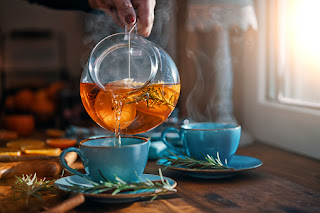
If you have a favorite brewed tea, try boiling it with orange and grapefruit slices and a sprig of rosemary.  Of course, if you wish to sleep or relax, make sure the tea is decaffeinated. You can also heat up apple juice with citrus slices, cinnamon sticks, and clove for a simple cider. For an even more potent vitamin punch, try some Hot Citrus Apple Cider or include other antioxidant- and Vitamin C-rich fruits in your beverage, such as this Warm Cranberry Citrus Drink. And while we definitely do not recommend boozing up your healing beverages, as alcohol can be both dehydrating and disorienting, do try this simple Citrus Hot Toddy minus the spirits.  The added sweetness of honey soothes the throat and offers antibiotic benefits.

Bring some sunshine to your chilly winter with a nice warm citrus-infused drink, get cozy, and enjoy Florida sunshine right there in your mug!


 Sources:

https://www.mercurynews.com/2013/12/06/who-knew-winters-chill-makes-oranges-sweeter/

https://www.theguardian.com/lifeandstyle/wordofmouth/2014/oct/28/hot-drinks-science-tasting-notes

Want to be notified when we post more articles? Sign up for our mailing list!

Monday, December 27, 2021

Here Comes 2022: To Your Health!


The new year is upon us, and just as we were getting back into the swing of things with holiday family gatherings and more, another COVID variant has us, once again, in a bit of a tailspin. Now, as we venture forth into an uncertain new year, we wonder: Can I make traditional resolutions? Will eating right make a difference in keeping me healthy? How can I nurture my mental health? Here in our household in the days leading to Christmas, we all started feeling under the weather. Fortunately, we had a whole gift basket full of delicious citrus from Florida Fruit Shippers, and after diving into them (I personally had a grapefruit every day), we soon felt a lot better. With this experience in mind, I wanted to delve further into the magical power of citrus to effect better health and better moods, with the hope that it will help us all enjoy a better new year.

FOCUSING IN ON HEALTH

Getting healthier is an almost universal New Year's resolution that can be aspired to anytime, Omicron variant or not.  While our physical health is vitally important, our mental health too needs some extra TLC during these unchartered times. Here at Florida Fruit Shippers, we are committed to bolstering your health journey with the support of citrus. Yes, citrus has been proven to have quantifiable positive effects not only through its better-known immunity-enhancing qualities, but also on your mental health. Let's examine some of the ways that oranges and other citrus foods can be your all-inclusive health ally during challenging times.


FOLLOW YOUR GUT

Citrus is water-rich, and getting adequate water intake is critical in keeping those cells hydrated and resilient. The water contained in a single orange is enough to satisfy half a cup towards your daily water intake. More hydration means better cognitive function and better flushing of toxins out of your system, making you feel better both mentally and physically. Want even more water out of your citrus? Drink freshly squeezed orange and grapefruit juices and watch your cognitive function soar; the flavonoids in citrus juices can enhance blood flow to the brain.

Oranges and grapefruits of all varieties are also full of good fiber; a single piece of citrus can provide over twelve percent of your daily recommended fiber intake.  Fiber keeps your gut healthy; this not only assists in keeping you regular, but also helps to regulate your blood sugar levels and contribute to better sleep.  Another bonus of the high fiber content in citrus is that it makes you feel fuller longer, thereby contributing to weight management.  These physical benefits also do a great service to your mood, and here's a little-known bonus: our guts contain a large number of neurons, second only to the brain.  Happy nerves make better moods.

ANTIOXIDANTS AS ANTIDEPRESSANTS


Many health-conscious foodies are aware that oranges are superheroes in the antioxidant department.  Known as flavonoids, the antioxidants in oranges are well-known to combat oxidative stress, fight cancer, and have antibiotic anti-inflammatory properties. In the good mood department, The American Journal of Clinical Nutrition reported that flavonoids have also been shown to help combat depression. Flavonoids are plentiful in the bright, orange-colored rind, or zest.  For maximum health benefits, it is recommended that you consume one tablespoon of zest per week. 

TAKE A DEEP BREATH


Feeling blue? Get orange! The mere smell of citrus fruits has long been known to have a positive, uplifting effect on the mood. By their very essence, a simple orange or grapefruit is a natural aromatherapy tool, with no fancy equipment or expensive products needed.  Just sniffing the outside of an orange or grapefruit might do the trick. To intensify the experience, scrape or pierce the rind to release the essential oil aromas, close your eyes, and inhale deeply. Most people describe the effect of citrus aromatherapy as equally uplifting and anxiety-easing. Best of all, there are no side effects or contraindications.

Wishing you a healthy, happy 2022, both inside and out.

Sources:

 7 Health Benefits of Oranges, According to a Nutritionist | Health.com

Why Citrus Fruits Induce a Feeling of Calm - Grace & Lightness Magazine (graceandlightness.com)


Want to be notified when we post more articles? Sign up for our mailing list!

Saturday, December 11, 2021

The Tradition of Giving Oranges for Christmas


Oranges for Christmas

Ties, slippers, bicycles, video game consoles, chocolates, and (inexplicably) fruitcake are all staples of holiday gift-giving. But no gift suits the Christmas tradition better than oranges.  Long touted in Asia as "the fruit of life," receiving an orange in ancient times was considered a tremendous honor, due to the belief that oranges held magical powers that could ward off evil and bring good fortune.  Today, receiving an orange in one's stocking or a gift basket of citrus fruits and other goodies is a timeless gift that has its roots in Christmases of times long ago.

A Little History

The tradition of giving oranges for Christmas can be traced back to the early 19th century, when people started hanging stockings on their mantels. According to one of the classic legends of Saint Nicholas, there were three sisters who couldn't afford their dowries for marriage.  Jolly ol' St. Nick threw three pieces of gold down their chimney, which landed, one each, in three stockings that were hanging on the fireplace mantel to dry. When the "Night Before Christmas" was published and widely received in 1823, the tradition of hanging stockings for Christmas was born, and a sweet orange placed in the stocking's toe was used to represent good fortune for the recipient and the generosity of a magnanimous Saint Nicholas, also known as Santa Claus.

A Little More History

During the Great Depression, oranges and other citrus fruits were a delicacy and very hard to come by.  Giving citrus as a gift was considered generous, and to receive even a single orange or tangerine was a luxurious treat.  Even well into the twentieth century, oranges were not easily accessible in cold midwestern and northern states. Oranges made for an exotic and refreshing gift during the holidays, one that northerners would cherish since citrus wasn't readily available. With the advent of mass-produced confections and the newer tradition of overconsumption, parents appreciated the natural, healthy sweetness of oranges as a fresh alternative to all of the heavy holiday foods and desserts.


What About Today?

These days, folks almost anywhere can go to a big box store and buy a bag of citrus. However, the quality of produce available en masse is questionable at best. Both taste and nutrition are directly impacted by the quality of the fruit and the care in which it is grown, harvested, and transported.  So, while more people these days may have regular access to a mediocre orange or grapefruit, few people have ever tasted and experienced both the pleasure and nutrition of a high-quality fruit that is truly gift-worthy. In the spirit of sustaining a longstanding and healthy Christmas tradition, it makes sense to make sure that the citrus you gift is from a reliable source that has many wonderful gift-giving options.


From all of us here at Florida Fruit Shippers, we wish you and yours a happy, healthy, Merry Christmas!

Sources:

https://www.countryliving.com/life/a40920/oranges-in-christmas-stockings-history/

https://www.smithsonianmag.com/arts-culture/why-we-should-bring-back-tradition-christmas-orange-180971101/

https://www.tasteofhome.com/article/surprising-reasons-might-find-orange-christmas-stockings/

Want to be notified when we post more articles? Sign up for our mailing list!

Friday, November 26, 2021

Holiday Self-Care with Citrus


Ahhh, the holidays.....a whirlwind of cooking, eating, family gatherings, gift-exchanging, festive decorating, celebrating, socializing, and...stress. It seems ironic that we get "time off" for the holidays only to fill that time right up with an extensive to-do list, one that is usually more than what most mere mortals can handle.  Don't get me wrong--we WANT to do these holiday things. We thumb through magazines and click through websites loaded with inspired ideas that get our holiday cockles all aglow...until the glow fades out and we find ourselves in the middle of a pile of half-wrapped gifts and half-decorated cookies, feeling half-baked, overwhelmed and out of juice. Funny we should mention juice...but more on this later.

Self-Care Is Important During the Holidays

One of the most beautiful features of the holiday season is its emphasis on giving. Whether it's a trip to the mall or local artisan markets to buy presents, sending delicious citrus and special treats from Florida Fruit Shippers to friends and family all over the world, volunteering at a local shelter, or donating food to help fill the shelves of a community food pantry, it is easy to forget that we have to restock our own shelves regularly to keep the momentum of giving spirit going. It's not shelve-ish (er, selfish). In fact, it behooves us to create space for some self-care in the midst of the activity whirlwind. Ironically, a little bit of time spent in taking care of yourself will pay off with more time and energy to keep going

Citrus Can Help!

So what does all of this have to do with juice, and how can citrus possibly help with easing the stress of the season?  Well, there are actually a number of ways you can turn to our favorite fruits to help nurture body and mind, depending on how much time you have.  


Hydrate with Orange Juice
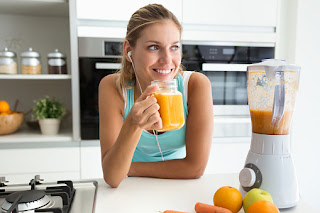
One of the most overlooked causes of fatigue is dehydration. The equation is simple: we get busy + we forget to hydrate = we get dehydrated.  Now, keeping a jug of water nearby is always a good idea.  When things are particularly crazy, however, enjoying a tall, cool glass of orange juice once or twice per day in addition to your regular water intake can have amazing restorative effects.  Along with its hydration benefits. the blast of vitamin C will infuse your body with a sustaining source of energy and strengthen your immune system (lest we forget that holiday time is also cold and flu season). Orange juice has also been found to alleviate inflammation, and the fiber in its pulp is great for keeping us regular--another stress reliever! And, just the very act of taking a moment to restore and renew by enjoying a drink is restorative in and of itself.  Try not to chug it down, but rather take slow and steady sips, enjoying the moment of self-care.

Try a Grapefruit Facial

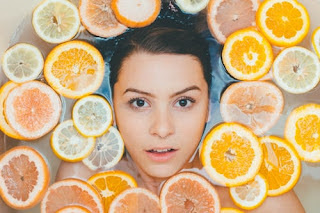
If you can carve out just a bit of time, try a facial. We hold a lot of tension in our countenance, often without even realizing it. A little nurturing attention to the area can work wonders for stress relief. But what kind of facial do we do, and how do we do it? When you do a search for the latest, greatest rejuvenating facials, most spas will offer some fancy version of a grapefruit or citrus peel treatment. Grapefruits are loaded with anti-inflammatory properties, as well as Vitamin C and its derivatives which lock in moisture to help us look and feel revitalized, so spas love to tout these benefits with their treatments and products. Going to a spa, however, can add stress to your pocketbook. Fortunately, there's no need to pay a spa or even purchase a product boasting grapefruit-extracted ingredients. Look no further than the grapefruit on your kitchen counter, and the plain yogurt (dairy or non-dairy) in your fridge! The recipe is simple: mix the juice from half of a fresh grapefruit with half a cup of plain yogurt, and apply to your skin.  Assume a reclining position on the couch or even in a warm bathtub for up to twenty minutes, rinse, and pat dry.  Drink a glass of orange juice, take a deep breath, and return to your holiday activities.


With a bit of citrus-enhanced self-care, you can be indeed be assured of a less-stressful, FUN holiday season!  From all of us here at Florida Fruit Shippers to you, Happy Holidays! 

Sources:
https://www.healthline.com/nutrition/orange-juice-benefits
https://helloglow.co/grapefruit-for-skin


Want to be notified when we post more articles? Sign up for our mailing list!

Wednesday, November 24, 2021

Mindful Eating with Oranges


 'Tis the season....to overeat.  It's practically expected and even encouraged of us during this festive, food-centric time of year. How many holiday feasts throw moderation to the wind during that second, third, or even fourth helping, or that extra slice of pie? No big deal, we rationalize; we only do this once or twice per year, after all. Except that statistics show that Americans actually binge a lot more often than that, and that the season for gratitude is quickly being replaced by the season for overconsumption.

The Overconsumption Cycle

A big part of the reason for this urge to binge, according to Psychology Today, is actually due to deprivation.  While that may sound paradoxical, closer examination reveals a lot of logic to this observation: by totally depriving ourselves of foods we really love during times when we have good willpower, we are only building up potential energy for a binge fest during times of stress, fatigue, or when given an excuse like a holiday feast.  This hyperbolic pattern of eating is unwholesome for the body and the mind, because it also fosters feelings of guilt and shame. These feelings exacerbate an unhealthy cycle: we don't eat what we "shouldn't," then we eat too much of it, then we feel bad about ourselves, and the cycle starts all over again. However, there is a solution, and it doesn't involve giving up the joy of a hearty meal.

Oranges to the Rescue!


Enter the humble yet all-powerful orange, which is a delicious, nutrition-packed gateway to moderation and a wonderful choice for cultivating mindful eating. Just eating an orange, mindfully or not, will immediately fill you up with nutrients and fiber enough to make you want to eat less and eat healthier, especially when paired with a tall glass of fresh water. Starting any meal with an orange, or eating an orange after a meal but before dessert, will work wonders to curb overindulgence.

What is Mindful Eating?

The solution to breaking the deprivation-overeating cycle, according to health experts and dieticians, is mindful eating, also known as intuitive eating.  The concept of intuitive eating is multi-faceted: honor your hunger, look at food as your sustenance versus your enemy, end self-judgement based on what foods you're choosing to eat at any given moment, slow down your chews and swallows and begin to tune in to when you feel satisfied, practice self-compassion when you are struggling, make smart food choices without depriving yourself of other foods you might not classify as "smart" but which you really really want (think of that pie!), stay active. While these may read like a list of very different things, they really all are versions of being mindful about your relationship to food and your body.  But how can we learn to be mindful in this way?  Once again, we can turn to the mighty orange!

Meditation on an Orange


Try this easy meditation exercise in the morning, right after waking up and before you carry on with the rest of your usual routine.  

    *Inhale. Exhale. 

    *Walk slowly to the kitchen, paying attention to the sensation of the contact of your feet on the floor.

    * Reach your hand out and pick up an orange from Florida Fruit Shippers

    *Feel its size and weight in your hand.  Turn it around a few times, getting a sense of its texture and observing its color and shape. 

    *Close your eyes.  Bring the orange to your nose and inhale deeply. Imagine the sun, rain, and soil that grew the tree that fruited this orange. 

    *Open your eyes and observe the orange again.  Gently begin to peel the rind, being attentive to the feel of the flesh and the aroma of the zest. 

    *Tenderly separate each segment of the orange. Observe the patterns and colors on a segment. 

    *Draw a segment to your mouth. Inhale. Exhale. Take a small bite. Notice the burst of juice and sweetness on your tongue and the inside of your cheeks. 

    *Chew slowly, and do not lift another segment until this one has been fully experienced, chewed, and swallowed.  

    *Continue with the remaining segments, inviting your senses to partake of each step. 

    *Notice any additional or new sensations or emotions, such as an urge to rush, and allow these feelings to arise without judging or acting on them.  Continue to move slowly and mindfully, and with gratitude.  

When the orange has been fully ingested, remain still for a few more minutes, inhaling and exhaling, enjoying the aftertaste, and inviting  gratitude.  Notice throughout your day how this mindful eating can inform your other meals and even your other tasks. Here's to a happy and healthy holiday season, and an invitation to enjoy--really enjoy--your holiday meals!

Sources: 

https://www.psychologytoday.com/us/blog/eating-mindfully/201411/surviving-thanksgiving

https://www.intuitiveeating.org/10-principles-of-intuitive-eating/

http://www.wizduum.net/article/meditation-eating-orange

Want to be notified when we post more articles? Sign up for our mailing list!

Wednesday, November 17, 2021

How to Make a Citrus Menorah


Want to get a head start on December festivities?  This year, Hanukkah --The Jewish Festival of Lights-- begins in November. It is celebrated for eight nights, starting on November 28 and ending on December 6. Even if you're not Jewish, Hanukkah (also spelled Chanukah and Hanukah) contains wonderful traditions and decorations that merge beautifully with the spirit of this time of the year.  Lights, food, family, games, gifts, and gratitude all play a part during the celebration of Hanukkah, and the centerpiece is, without a doubt, the Menorah.   

What Is a Menorah?

A menorah, which translates from Hebrew as "lamp stand," is a candelabrum with branches on it to hold seven or nine candles. The Hanukkah menorah, or Hanukkiah, contains nine branches: a taller one called the shamash in the center, and four shorter ones to the left and right of the shamash.  Hanukkah menorahs come in all shapes and sizes, from simple and tiny to very embellished, large, and expensive.  But it isn't necessary to spend a lot of money or time to enjoy a beautiful menorah in your home.  If you have a grapefruit, eight oranges, and a box of Chanukah candles available at most stores or online, you can make your own!

Why Make It with Citrus?

Well, here at Florida Fruit Shippers, where citrus is our passion, the immediate response from our vantage point is, "Why not?"  But beyond even that, it is interesting to note that oranges and grapefruits have a long history in the traditions of Jewish culture. Because citrus fruits have always been an important part of holiday meals and ceremonies, Jewish farmers who lived some 1,500 years ago mastered cultivation of citron and then many other varieties of citrus as the diaspora spread throughout the Mediterranean and beyond, and Jewish merchants were able to spread the deliciousness of citrus even further. With this bit of history in mind, it makes sense that a citrus menorah is aligned with Hanukkah. So, if you love to DIY as much as me, you'll love this easy project that results in a festive, fragrant, and very affordable menorah!  

How to Make It

You'll need one grapefruit and four oranges for your citrus menorah.  First, find a platter or large board to situate your fruit upon. Line with aluminum foil. Cut just bit off of the bottom of the grapefruit so that it is flat.  Place the grapefruit securely at the center of the platter.  Make sure it is stable--we are lighting a candle on it! Then, cut each of the oranges in half and place them flat side down on both sides of the grapefruit, four on each side. Take a paring knife and cut holes at the top of each piece of citrus, just big enough to situate a Hanukkah candle inside, but not so big that the candle isn't secure. 

How to Use Your Citrus Menorah

You will need a full box of menorah candles (available at most big box stores or online). At sundown on the first night of Hanukkah, light one candle, the shamash, and put it in the grapefruit at the center.  Then, place one unlit candle on the orange furthest to the right. Use the shamash to light the first orange candle.  Sing a song or take a moment of quiet reflection, and allow the candles to burn all the way to exhaustion (do keep an safety eye on them, as with anything using fire). On the second night, place candles in the two oranges furthest to the right, and light them with the shamash. Continue in this way each night, adding a candle from right to left until the eighth night, when all of the candles will be lit.  If you wish, you can exchange gifts each night, or just on the last night.  We suggest a gift basket from Florida Fruit Shippers!

Wishing you and yours a happy and citrus-illumined Hanukkah.

Want to be notified when we post more articles? Sign up for our mailing list!

Friday, November 12, 2021

Thanksgiving Recipes Are Better with Oranges

Orange you glad it’s Autumn? Okay, okay, pun notwithstanding, oranges are a delightful companion to cooler weather recipes, and particularly Thanksgiving classic side dishes like cranberry sauce, stuffing, green beans, and apple cider. Boasting a perfect combination of sweet and tart flavors, not to mention the healthy polyphenols from the zest, oranges lift the traditional hearty repast into brighter territory.  

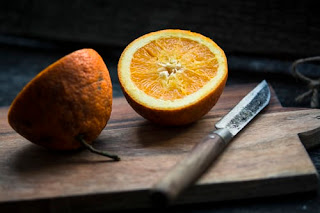
orange fruit beside clear drinking glass filled with black liquid

 Some Chef's Secrets


It is helpful to have a few simple culinary terms, tools, and techniques under your belt before diving into the recipes.  

The first one is the term zest, aka the outer colored portion of a citrus peel, or in this case the orange outer layer.  When a recipe calls for zest, it is typically asking for the outer peel to be finely grated or minced. 

There is a bit of finesse involved, as we want to separate the zest from the white, pithy inner layer of the peel, which can be quite bitter.  The most straightforward way would be to use the smallest holes on a simple rasp, plane, or box grater, and hand grate a washed orange until the orange layer is gone. If you don’t have a grater on hand, you can use a vegetable peeler and fleck off small pieces of zest at a time until the orange looks white. A typical orange will yield about two to three tablespoons of grated zest.

 Not only is zest tangy and delicious; it is also loaded with polyphenols, which have anti-inflammatory properties. And if you get a little of the white pith mixed in, don’t worry; bitters are very healthy and it’s not likely to overpower the sweet piquancy of the zest.  

Another helpful technique is knowing how to juice an orange. No matter which technique you use to juice, do roll the orange on the counter a few times first, to help break down the cell walls so the fruit releases its juices more readily.

If you have a manual juicer, cut the orange in half and simply press and twist each half downward onto the juicer, making sure that the whole rig is situated over a catch bowl to collect the prized juice.  If you do not own a juicer, there is a fu --if slightly less neat--way to juice that I learned from a friend: Cut the orange in half at its widest diameter.  Take a fork and poke the tines all over the exposed innards of the fruit. Then, plunge the fork into the center of the orange, hold it over a bowl, and twist.  Continue this process, moving outward from the center to the rind until not one ounce of juice remains in the fruit. Pick or strain out the seeds and voila!  You have juiced your orange.

Important tip: If a recipe calls for both orange juice and zest, remember to zest the orange first, as zesting a juiced orange is almost impossible. 

Which Oranges Should I Use?

Here’s an important question: Which orange varieties are best for zesting, juicing, and cooking? 

For zesting, any variety will do, but to minimize waste it is wise to use the same orange as the one you will be juicing.  A general rule of thumb is that oranges with the most vibrant rind color generally procure the tastiest zest and yummiest juice. Valencias, Tangelos, Satsumas, Blood Oranges, Clementines, Sugarbelles, Honeybelles, and even Navels are all great choices—as long as they are sweet! For straight-up cooking, as in with your apple cider, you can’t lose with Navels or Blood Navels, as they hold their shape well and have the added bonus of being seedless.

The Recipes!

Here are some simple and delicious recipes for your holiday cranberry sauce, stuffing, green beans, and apple cider, all enhanced with the flavor appeal of oranges. These recipes were carefully chosen for nutrition, ease of preparation, and easy substitution with gluten-free and/or vegan alternatives. Not sure about whether you’re buying the best oranges for each recipe?  Don’t worry: here at Florida Fruit Shippers, we’ve got you covered: Premium Oranges 

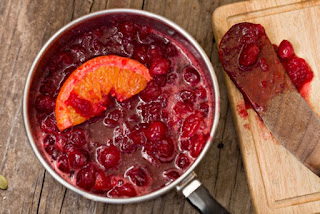
CRANBERRY SAUCE WITH ORANGES

In this recipe, you'll add a little "zest" to your cranberry sauce--literally! 


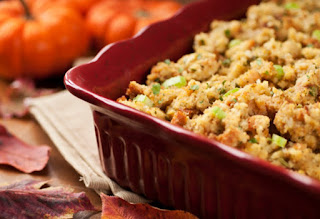
SAVORY ORANGE STUFFING

No worries about bland dressing with this recipe! Can substitute gluten-free dressing mix and vegan butter and bouillon if desired.


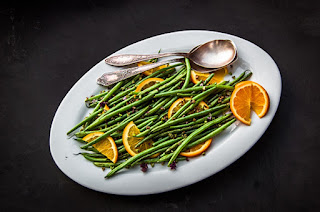
ORANGE GINGER GREEN BEANS


Mmmmm, ginger and orange together....


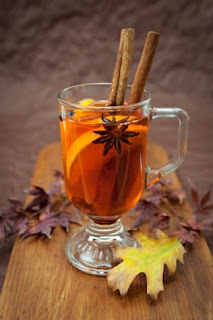
ORANGE CINNAMON APPLE CIDER

Like ginger, the spicy notes of cinnamon pair beautifully with oranges.


And of course, you can’t lose by garnishing your Thanksgiving turkey (or tofurkey) with slices of a color variety of delicious oranges.  Have a delicious Thanksgiving!


Additional Sources:

https://www.myrecipes.com/extracrispy/the-best-way-to-make-fresh-oj-without-a-juicer


Want to be notified when we post more articles? Sign up for our mailing list!

© 1996-2013 Vegetable Kingdom Inc., PO Box 530456, St. Petersburg, FL 33747 All rights reserved.
Florida Fruit Shippers® is a registered trademark of Vegetable Kingdom Inc.